How modern ECUs actually work
Your engine control unit runs thousands of lookup tables — fuelling vs RPM, boost vs load, ignition advance vs coolant temperature, torque limiters per gear, smoke limiters, lambda targets, rail pressure targets and dozens more. A remap isn't a single 'turn it up' dial — it's a coordinated rewrite of the maps that matter, while leaving safety and emissions logic intact. That's why off-the-shelf files cause so many problems: they change torque without recalibrating fuelling, or raise boost without adjusting the limiters that protect the turbo.
OBD flashing vs bench tuning vs boot mode
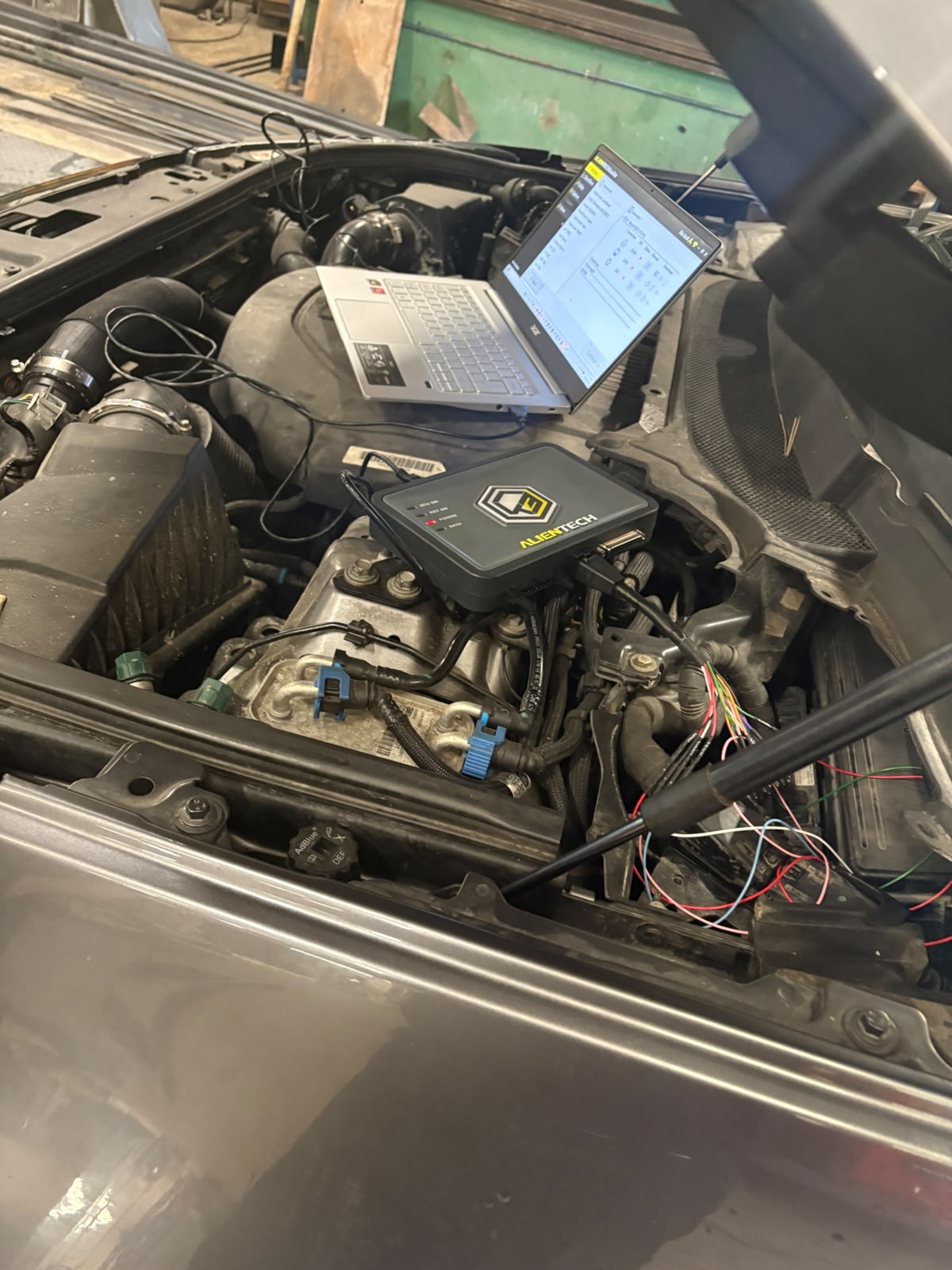
Most modern cars and vans (Bosch EDC15/EDC16/EDC17, Siemens, Delphi, Continental) read and write cleanly through the OBD port. Some newer Tricore and TC1797-based ECUs need bench access through the connector pinout. A handful of locked units (later VAG MED17.5, certain BMW MSV/MSD, some PSA) require boot-mode tools. We use the right method for your vehicle — never force a write through the wrong protocol.
Stage 1, Stage 2 and economy maps
Stage 1 is the standard hardware power remap — no parts needed, written for the factory turbo, injectors, intercooler and DPF. Stage 2 assumes supporting modifications: a freer intake, performance intercooler, decat or sports exhaust. An economy remap is a separate calibration aimed at low-load fuelling efficiency, lower shift points and tighter pedal mapping — popular with fleet vans and high-mileage diesels.
Petrol vs diesel calibration differences
Petrol turbo gains come mostly from boost pressure, ignition timing and fuelling targets — VW 1.4 TSI, 2.0 TFSI/TSI, BMW N20/B48, Ford EcoBoost respond very well. Diesel gains come from injection duration, rail pressure, boost and torque limiter changes — VAG 1.6/2.0 TDI, BMW N47/B47/N57, Ford Duratorq, Mercedes OM651 and most modern HGV units (Scania, DAF, Volvo, MAN) are bread-and-butter work.
What we never touch — and what we always check
We don't write files that delete DPFs, EGRs or AdBlue on road-going vehicles in the UK — it's an MOT failure and an emissions offence. We do diagnose and fix the underlying fault so the system works as intended. Every remap is verified with a road test logging boost, lambda (petrol) or rail pressure and EGT (diesel) before the vehicle is handed back.
Local coverage: Merthyr Tydfil, Cardiff, Swansea, Newport, Bridgend, Caerphilly, Port Talbot, Chepstow and Cwmbran
We come to you anywhere across South Wales — driveway, workplace, yard or farm. Most remaps are completed in 45–90 minutes on-site. For trucks, tractors and bench jobs, we'll quote a slot that fits around your working day.